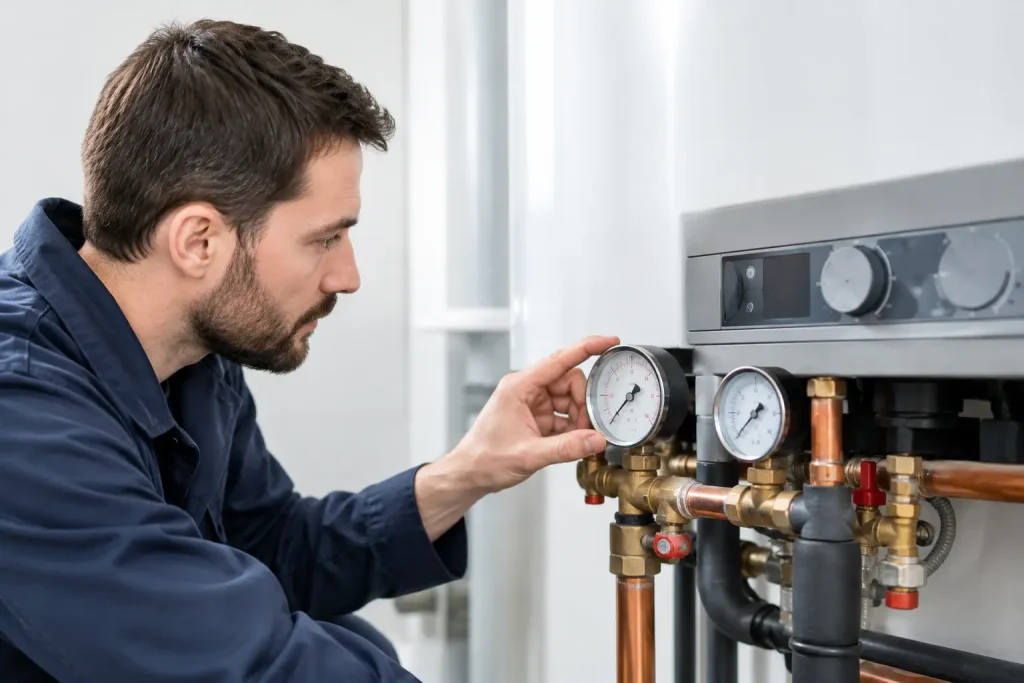
A boiler pressure gauge can be easy to ignore until the heating stops working or the hot water turns lukewarm. So, why does a boiler lose pressure? In most homes, it means water has escaped from the sealed central-heating system, either through a visible leak, a safety discharge pipe or a fault within the boiler. It is not usually something to panic about, but pressure that keeps falling needs a proper diagnosis.
For homeowners across Thanet and East Kent, the practical question is whether the boiler simply needs repressurising or whether there is an underlying fault that should be repaired. The difference matters. Repeatedly adding water without finding the cause can mask a leak and may lead to further damage, corrosion or an unexpected breakdown.
What boiler pressure should be
Most modern combi and system boilers operate as sealed systems. When the heating is cold, the pressure gauge will commonly sit between 1 and 1.5 bar, although the manufacturer’s instructions for your particular boiler always take priority. Once the radiators are hot, the reading rises slightly because water expands as it warms.
If the gauge drops below around 1 bar, many boilers will display a fault code or switch off to protect themselves. You may still have electricity and gas supply, but no heating or hot water until the pressure is restored. A low-pressure warning is a safety feature, not a sign that the boiler should be forced to continue running.
It is also worth knowing what normal looks like. Checking the gauge every few weeks, particularly through winter, can help you spot a gradual problem before you wake up to cold radiators.
Why does a boiler lose pressure over time?
A very small reduction in pressure over many months can occur as air is released during normal system use, especially after work has been carried out on radiators or pipework. However, a boiler that falls from a normal reading to low pressure in days or weeks is not behaving normally. Water is likely leaving the system somewhere.
A leak on radiators, valves or pipework
The most common cause is a leak in the heating system. Look carefully around radiator valves, bleed points, towel rails and exposed pipe joints. Damp patches, staining, green or white deposits around fittings, and a persistent musty smell can all point to a slow leak.
Not every leak is obvious. Pipework often runs beneath floors, behind kitchen units or through walls, so a system can lose pressure without leaving a clear puddle. In older properties, corrosion within radiators or hidden joints is more likely. In newer homes, a fitting or valve may simply have failed.
Do not use leak-sealing products as a substitute for a correct repair unless an engineer has advised that they are suitable. They can occasionally be useful in limited circumstances, but they are not right for every system and can complicate future work.
Water escaping through the pressure relief valve
Your boiler has a pressure relief valve, designed to release water safely if pressure becomes too high. Outside, there is usually a small copper pipe passing through the wall near the boiler. If water is dripping or running from this pipe, the system is losing water through the safety valve.
This often happens because the boiler pressure rises too high when the heating is on. The valve may have operated correctly at first, but it can fail to reseat fully afterwards, allowing water to continue escaping. A qualified engineer needs to identify why the pressure rose in the first place and whether the valve needs replacing.
A faulty expansion vessel
The expansion vessel manages the natural increase in water volume as your heating warms up. It contains a sealed air charge that cushions this expansion. If that charge is lost, boiler pressure can rise sharply when the heating is running, sometimes approaching 3 bar, then fall very low again once everything cools.
This pattern is a useful clue: low pressure when cold, an unusually high reading when hot, and possible dripping from the outside discharge pipe. The expansion vessel may need recharging or replacing. This is not a homeowner repair, as it involves working within the boiler casing and checking safety components.
Recent radiator bleeding or heating work
Bleeding radiators releases trapped air, but it also releases a small amount of system water. After bleeding several radiators, it is normal to need to repressurise the boiler once. The same applies after a radiator has been removed, a valve changed or pipework altered.
If the pressure stays stable after you top it up, there may be no further issue. If it drops again shortly afterwards, treat that as evidence of a leak or component fault rather than simply topping up again.
A problem inside the boiler
Internal leaks can develop in components such as the heat exchanger, pump, automatic air vent or hydraulic connections. These faults are not always visible from outside the appliance. They should only be inspected by a Gas Safe registered engineer.
Never remove your boiler’s case to investigate. A boiler contains gas-carrying parts, electrical components and combustion seals. Even where the fault is water-related, the appliance must be left safe and correctly reassembled after any work.
Safe checks to make before calling an engineer
Start by looking at the pressure gauge while the system is cold. Make a note of the reading, then check it again after the heating has been running for an hour or two. A significant rise and fall gives useful information to the engineer.
Next, inspect visible radiator valves and pipework for drips or staining. Check the copper discharge pipe outside, without touching it if it appears hot, and see whether it is dripping when the boiler is off or after the heating has run. If you have recently bled radiators, consider whether that explains a one-off loss of pressure.
You can usually repressurise your boiler using its filling loop or built-in filling key, following the manufacturer’s instructions. Fill slowly to the recommended cold pressure, normally around 1 to 1.5 bar, then close the valves securely. Do not overfill it. If the gauge approaches 2 bar while cold, stop and seek advice rather than guessing.
Avoid making repeated top-ups. Fresh mains water introduces oxygen and minerals into the heating system, which can increase internal corrosion over time. Once may be appropriate after radiator bleeding; needing to do it regularly is a reason to book a repair.
When low boiler pressure needs urgent attention
A low-pressure boiler is not automatically an emergency, but some signs should not wait. Turn the boiler off and arrange professional help promptly if you can see a significant leak, water is coming from the boiler casing, the pressure repeatedly rises towards 3 bar, or the boiler shows an ongoing fault code after repressurising.
If you smell gas, suspect carbon monoxide, or feel unwell with symptoms such as headache, dizziness or nausea, do not investigate the pressure issue. Turn off the gas supply only if it is safe to do so, open windows, leave the property and contact the relevant emergency service. A carbon monoxide alarm should always be treated seriously.
For landlords, a pressure issue also deserves prompt action. Tenants should not be expected to remove boiler covers or carry out repairs, and a loss of heating or hot water can quickly become a welfare concern, particularly for young children, older residents or vulnerable occupants.
How a professional diagnosis protects your heating system
A competent boiler repair is more than restoring a gauge reading. A Gas Safe engineer will check the visible heating circuit, pressure relief discharge, expansion vessel operation, internal components and the boiler’s general condition. Where a hidden leak is suspected, further investigation may be needed before any repair is recommended.
The best solution depends on the cause. A worn valve may be a straightforward repair, while corroded radiators, poor water quality or ageing pipework may call for a wider conversation about system cleaning, power flushing or upgrades. Clear findings and upfront pricing allow you to decide what is sensible for your home rather than paying for temporary fixes.
If your boiler has lost pressure once after radiator bleeding, repressurise it carefully and keep an eye on the gauge. If it loses pressure again, do not just keep refilling it. Getting the cause checked early is the simplest way to protect your heating, avoid water damage and keep your home warm when you need it most.


