A small puddle beneath a boiler is easy to dismiss, especially if your heating and hot water are still working. But water where it should not be can damage flooring, cupboards and electrical components, while a loss of pressure can leave you without heat at the worst possible time. Knowing how to spot boiler leaks early gives you a better chance of limiting the damage and arranging the right repair.
Not every drip means the boiler itself has failed. Condensation, a leaking radiator valve or pipework close to the boiler can all look similar at first. The key is to observe what you can safely see, avoid removing the boiler case, and call a Gas Safe registered engineer if the source is uncertain.
The first signs of a boiler leak
The most obvious sign is water under or around the boiler. Put a sheet of kitchen roll beneath the unit or the visible pipework and check it after an hour or two. This can help show whether water is actively dripping, rather than simply left over from a spill or a damp coat cupboard.
Look for staining on walls, warped skirting boards, peeling paint or a musty smell in the cupboard where the boiler is fitted. A slow leak may evaporate before it forms a puddle, yet it can still leave white or greenish deposits around joints and valves. These deposits are often a sign that water has been escaping for some time.
A boiler that repeatedly loses pressure is another common clue. Most sealed central-heating systems operate at around 1 to 1.5 bar when cold, although the correct range depends on the system and manufacturer. If the pressure gauge keeps falling and you need to top it up regularly, water may be escaping from the boiler, radiators, pipework or a safety discharge pipe.
Do not assume a pressure drop is harmless because there is no visible water indoors. Some leaks only show when the heating is hot, while others release water outside the property.
How to spot boiler leaks around visible parts
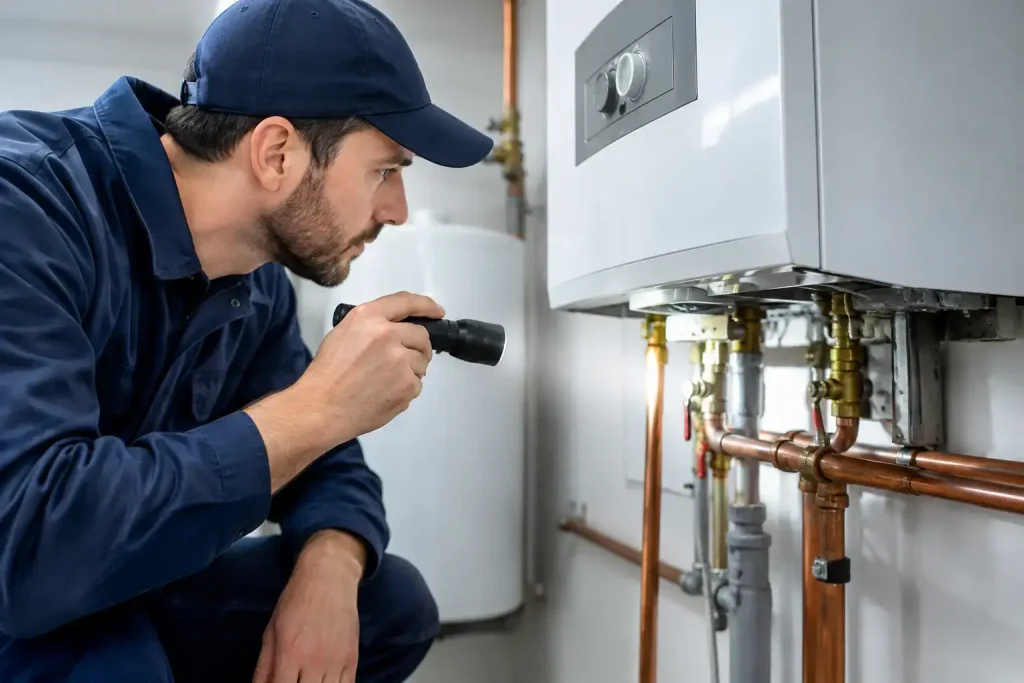
You can carry out a basic visual check without touching internal components. Start by looking at the pipes beneath the boiler, the radiator valves around the home and any exposed heating pipework. Check for droplets, crusty residue and damp patches, particularly after the heating has been running.
Pay close attention to these areas:
- Pipe connections beneath the boiler: A loose fitting, worn washer or corroded joint can allow a slow drip to form.
- The filling loop: If your boiler has a flexible silver braided hose or filling-key arrangement, check that it is not visibly dripping. Do not keep adjusting it to compensate for pressure loss.
- Radiator valves and bleed points: Dampness at a valve or rust around a bleed screw can point to a heating-system leak rather than a boiler fault.
- The pressure relief discharge pipe: This is usually a copper pipe that runs through an external wall. If it drips outside when the boiler is not heating, it often needs professional investigation.
The colour and feel of the water can offer a useful clue. Clear water may be from a mains-water connection or condensation. Dark, grey or slightly oily water is more likely to be central-heating water, which contains sludge and inhibitor chemicals. Either way, do not taste it or attempt to clean inside the appliance.
Check outside before assuming the leak is indoors
In East Kent, boilers are often installed in kitchens, utility rooms, airing cupboards and garages, where a minor leak may stay hidden behind stored items. It is also worth checking outside near the boiler position.
A steady drip from a copper pipe can indicate that the pressure relief valve is passing water. This valve is a safety component designed to release water if boiler pressure becomes too high. Dripping may be caused by a faulty valve, an issue with the expansion vessel, or debris preventing the valve from resealing properly. It is not a repair to put off, as repeated water loss can reduce heating performance and may lead to further faults.
You may also see water from a plastic condensate pipe. Modern condensing boilers produce condensate during normal operation, so the pipe itself is not automatically a concern. However, a leak at a joint, water running down an external wall, or a blocked or frozen condensate pipe needs attention. In cold weather, a frozen condensate pipe can cause the boiler to lock out.
Water or vapour near the flue should be treated with care. A small amount of condensation from the flue can occur in certain conditions, but staining, persistent dripping or damaged seals should be assessed by a qualified engineer. Never block, cover or interfere with a boiler flue.
Why boiler leaks should not be ignored
A minor leak can become an expensive problem because water finds its way into places you cannot see. It can damage timber flooring, kitchen units, plasterboard and electrical connections. Where heating water is leaking, the system may draw in fresh water when repeatedly topped up. Over time, this can encourage corrosion and sludge inside radiators and pipework.
There is also the practical issue of reliability. Low pressure can stop a boiler from firing, leaving your household without heating or hot water. If the leak is linked to a failed internal component, continued use may worsen the fault.
The trade-off is that not every sign of dampness requires an emergency call-out. A dry, old stain with normal boiler pressure may be monitored while you arrange a routine inspection. Active dripping, falling pressure, water near electrics, or a boiler that is locking out should be dealt with promptly.
What to do when you find water near the boiler
First, protect the area. Move towels, stored belongings and electrical items away from the water if it is safe to do so. Place a container or towels below a small visible drip to limit damage, but do not dismantle panels or remove the boiler casing to find the source.
If water is coming from the boiler itself, turn the heating off at the controls where possible. If there is a significant flow of water, switch off the boiler’s electrical supply at the fused spur only if the area is dry and safe to reach. Avoid touching electrical switches with wet hands.
Take a few clear photographs of the affected area and make a note of the pressure reading. This gives the engineer a useful starting point and may help identify whether the leak changes when the heating is on.
Do not repeatedly repressurise the system. One top-up after an isolated pressure drop may be reasonable if you have been shown how to do it, but regular topping up masks the underlying fault. It also introduces fresh water into the system, which is not good for long-term system health.
When a boiler leak is an emergency
Call for urgent help if water is flowing quickly, has reached electrical sockets or wiring, or you have lost heating and hot water during cold conditions. Landlords should also act quickly where a tenant’s heating system is leaking or unsafe.
A water leak is different from a gas emergency, but the two should never be confused. If you smell gas, hear hissing near a gas appliance, or suspect carbon monoxide, do not investigate the boiler. Turn off the gas supply if safe to do so, open doors and windows, avoid flames and electrical switches, leave the property, and call the National Gas Emergency Service on 0800 111 999. If a carbon monoxide alarm sounds, get outside immediately and seek urgent advice.
For a water leak without signs of gas danger, a Gas Safe registered boiler engineer can diagnose faults involving the boiler, pressure relief valve, pump, heat exchanger, seals and heating controls. A local plumber may be appropriate for leaking external pipework or radiator valves, but where the source is close to a gas boiler, the safest choice is an engineer qualified to work on the appliance.
Preventing repeat leaks
Annual boiler servicing is one of the best ways to catch worn seals, pressure issues and corrosion before they turn into water damage. During a proper service, the engineer checks safe operation as well as the condition of key boiler components and system pressure.
If radiators have cold spots, noisy circulation or black water when they are bled, the system may have sludge and corrosion that deserve attention. A power flush is not necessary for every home, but it can be beneficial where there is clear evidence of contamination or poor circulation. The right approach depends on the boiler’s age, the condition of the pipework and the symptoms across the system.
A boiler leak rarely improves by itself. Acting while the evidence is still visible helps the engineer find the cause, protect your home and get your heating running reliably again. If you are unsure where the water is coming from, Johnson Plumbing & Heating can provide a clear assessment and explain the repair before work begins.